"Matière de l’invisible"
Personal exhibition.
"Matière de l’invisible" (Matter of the Invisible).
Salle des Cimaises, Saint-Étienne. France. 2026.
Ceramics, installation, video, film photography.
The project is dedicated to the phenomenon of memory—fragile, sensuous, and deeply personal. Through simple, everyday objects, the artist draws attention to a hidden value that often goes unnoticed in the flow of daily life. Fleeting events are not always registered by consciousness, yet they leave behind a material trace: a forgotten napkin, a book marked with a page, a glove that has lost its pair. In themselves, these objects hold no particular significance, yet they acquire it through their connection to a specific person, moment, or experience.
Used day after day, these things quietly absorb lived experience, gradually becoming charged with a powerful emotional dimension. They turn into repositories of human feeling, material traces of shared moments—peculiar totems associated with loss, intimacy, and care. This project is about a radical attentiveness to the fleeting: about moments that pass unnoticed but gain weight in retrospect; about the quiet life of things that remain, still connected to the people and moments they belong to.
Porcelain, glass cloches, soil.
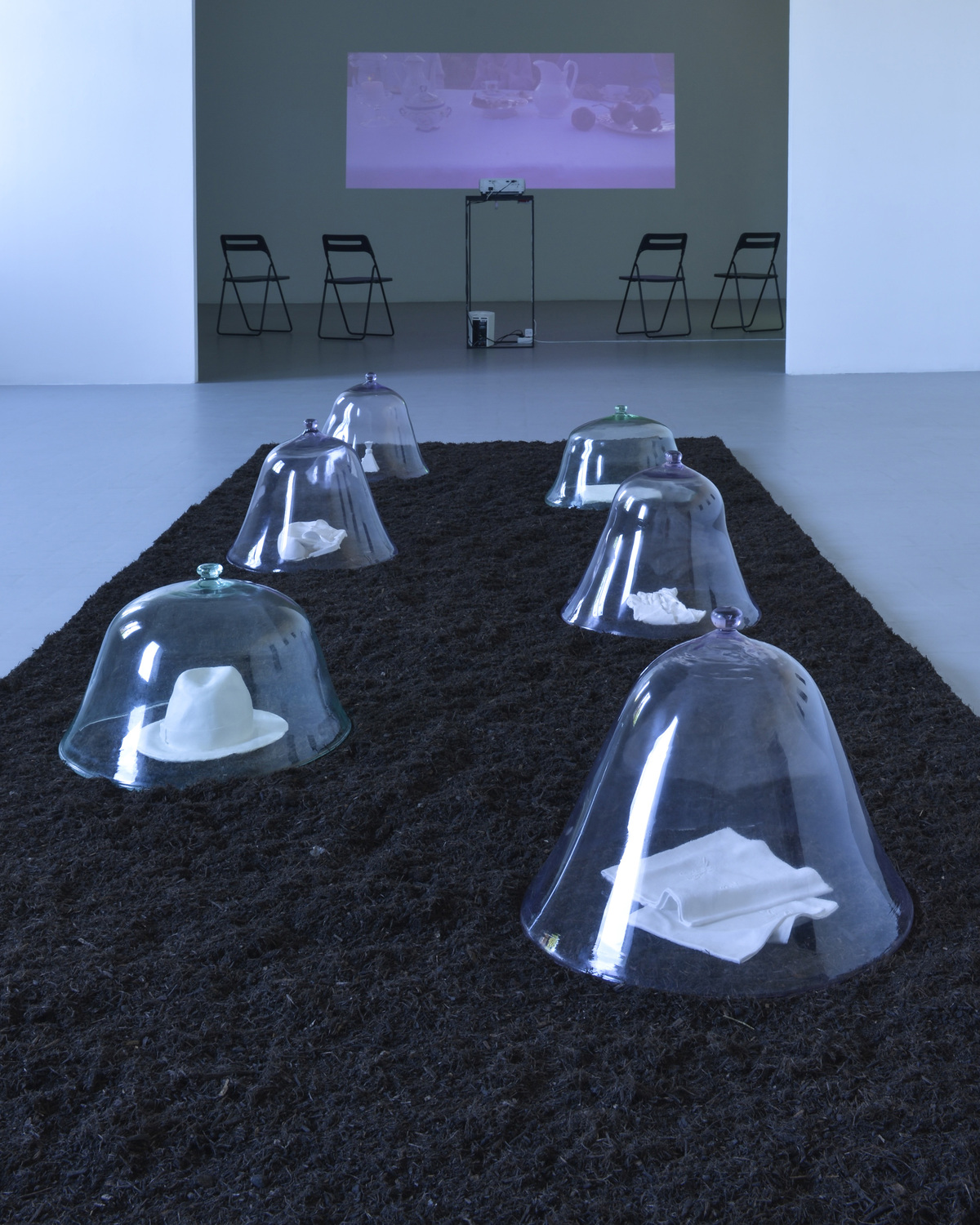
The installation draws attention to the value of simple, everyday objects that often go unnoticed. An object becomes important if it belonged to a loved one or is connected to a particular event. Gradually losing its utilitarian function, such an object turns into a kind of totem, embodying a fragment of a past.
The image of glass garden cloches refers to The Little Prince by Saint-Exupéry, where what becomes most precious to the protagonist is what he has cared for and protected. In the installation, the cloches cover utilitarian objects, granting them a precious status and transforming them into entities in need of protection.
The whiteness and vulnerability of porcelain intensify this impression, turning ordinary objects into relics that are at once extremely fragile and valuable.
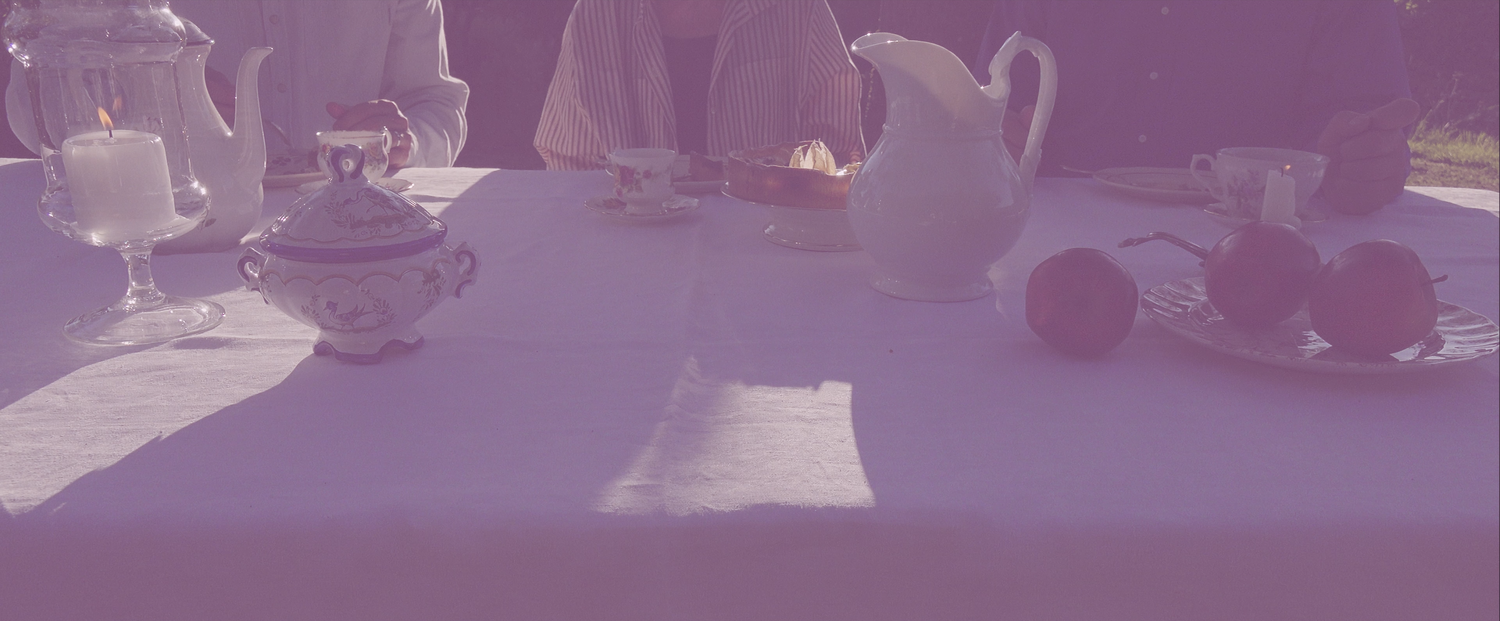
Dîner (Dinner).
Video. 15:52 min. 2025
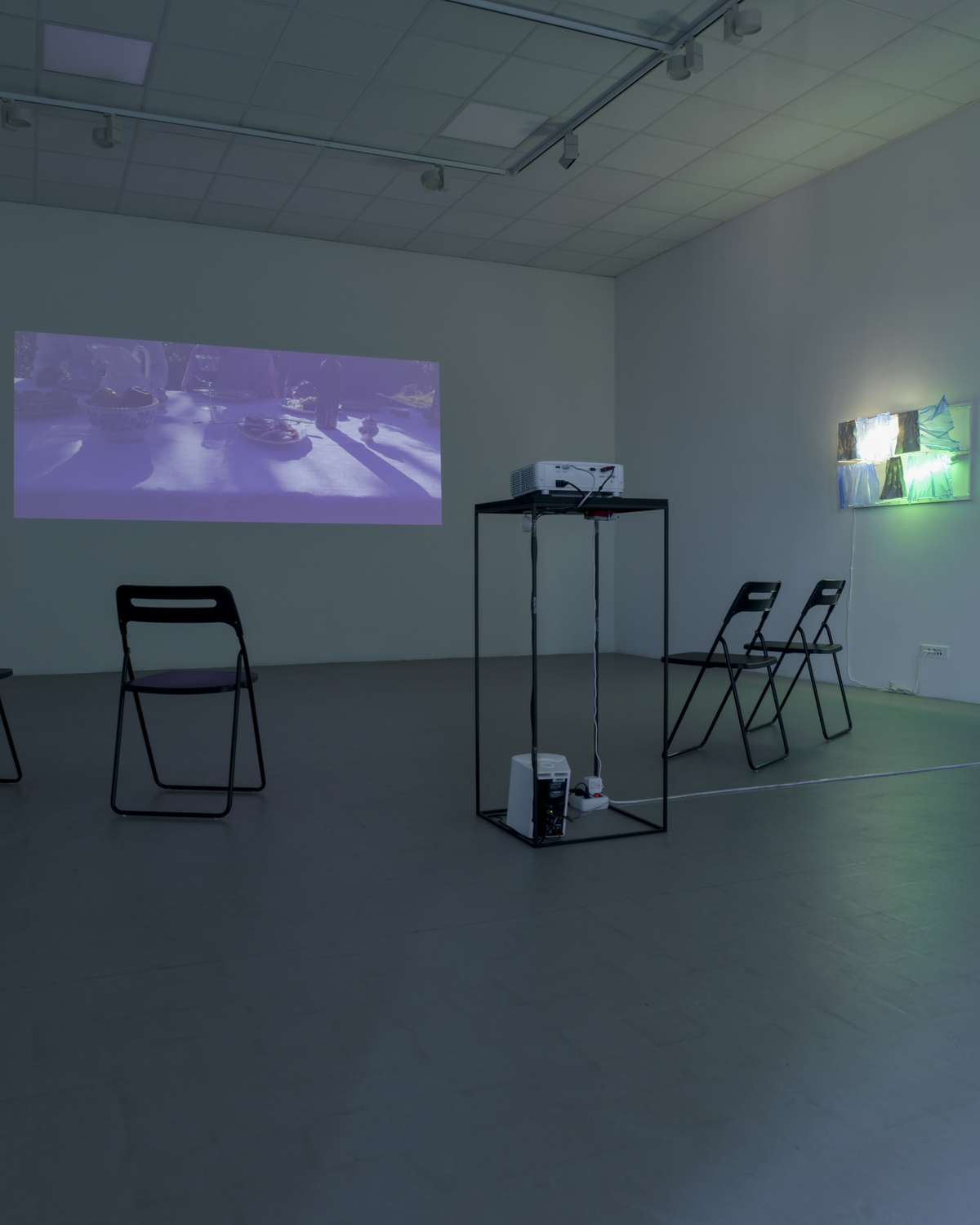
The video transports us into the atmosphere of a summer dinner outdoors — simple, joyful, ephemeral. We see only fragments: hands, tableware, light, shadows. As with memories, it is not complete scenes that remain, but sensations — the sound of leaves, the clinking of glasses, the voices of friends, conversations of little importance, yet memorable precisely for that reason.
This video speaks about the importance of small things and seemingly insignificant events. About the objects we use in everyday life and barely pay attention to, but which, over time, become not only utilitarian items, but true keepers of memory — a kind of totem connected to a loved one, to meaningful moments.
A video about those moments that go unnoticed but suddenly take on significance.
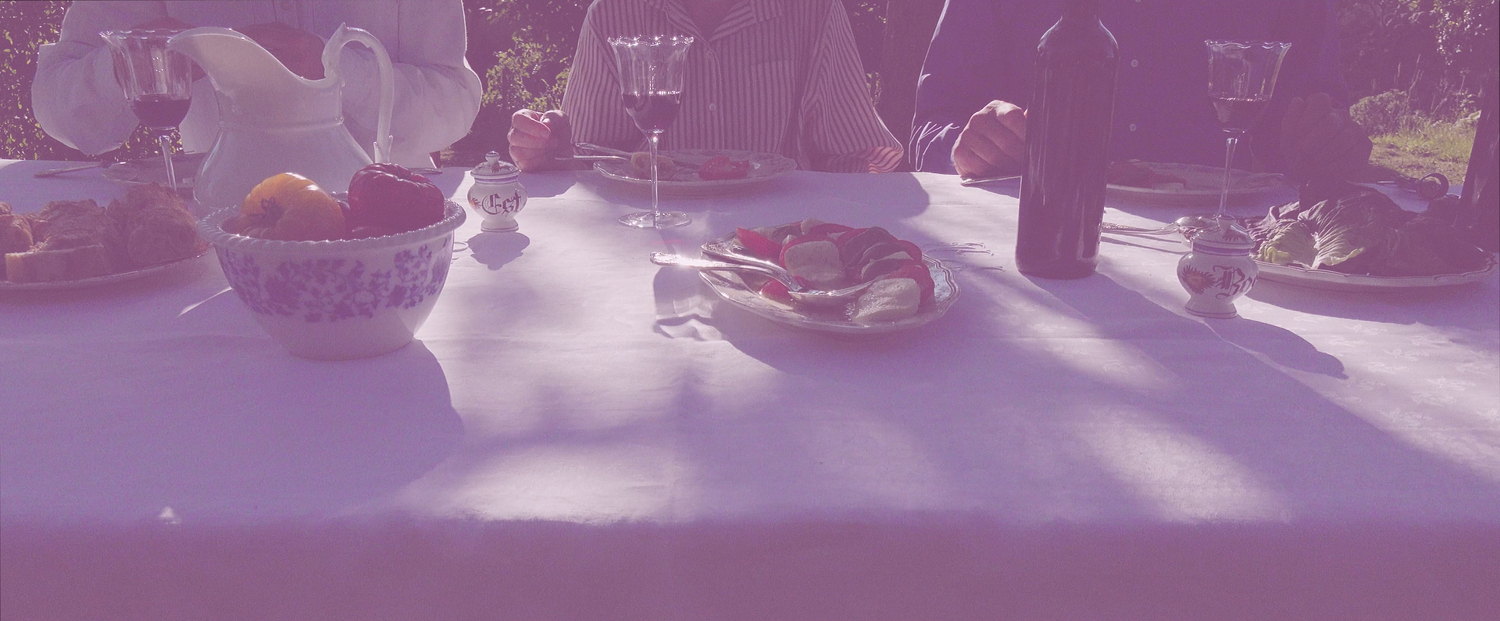
Dîner. 2025. Fragment
Processing video...
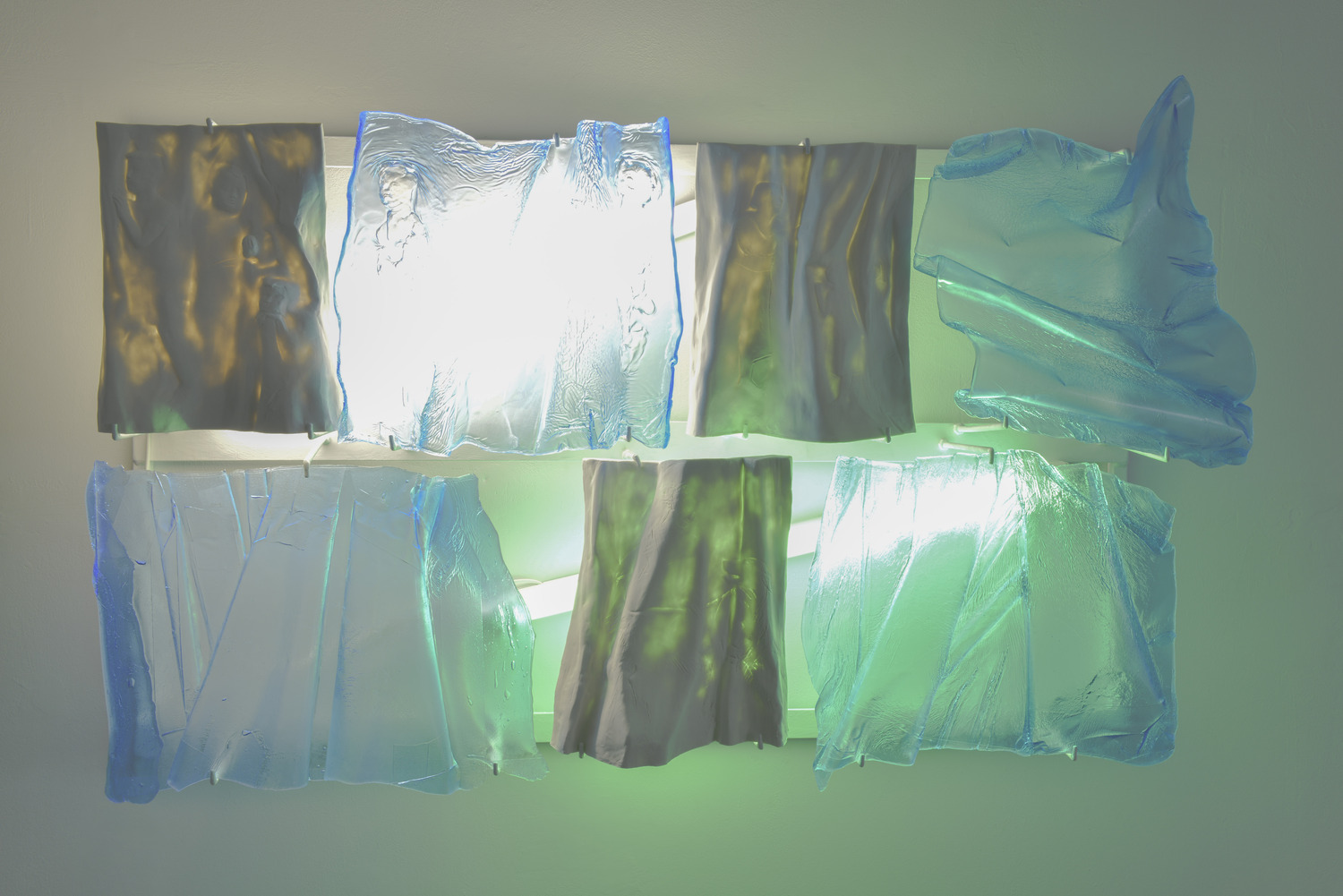
Porcelain, plastic, LED, metal.
Light reliefs further develop the theme of the instability of memory. Their plasticity is intentionally ephemeral: they emerge from darkness like dreams or half-forgotten images, blurring the contours of the real.
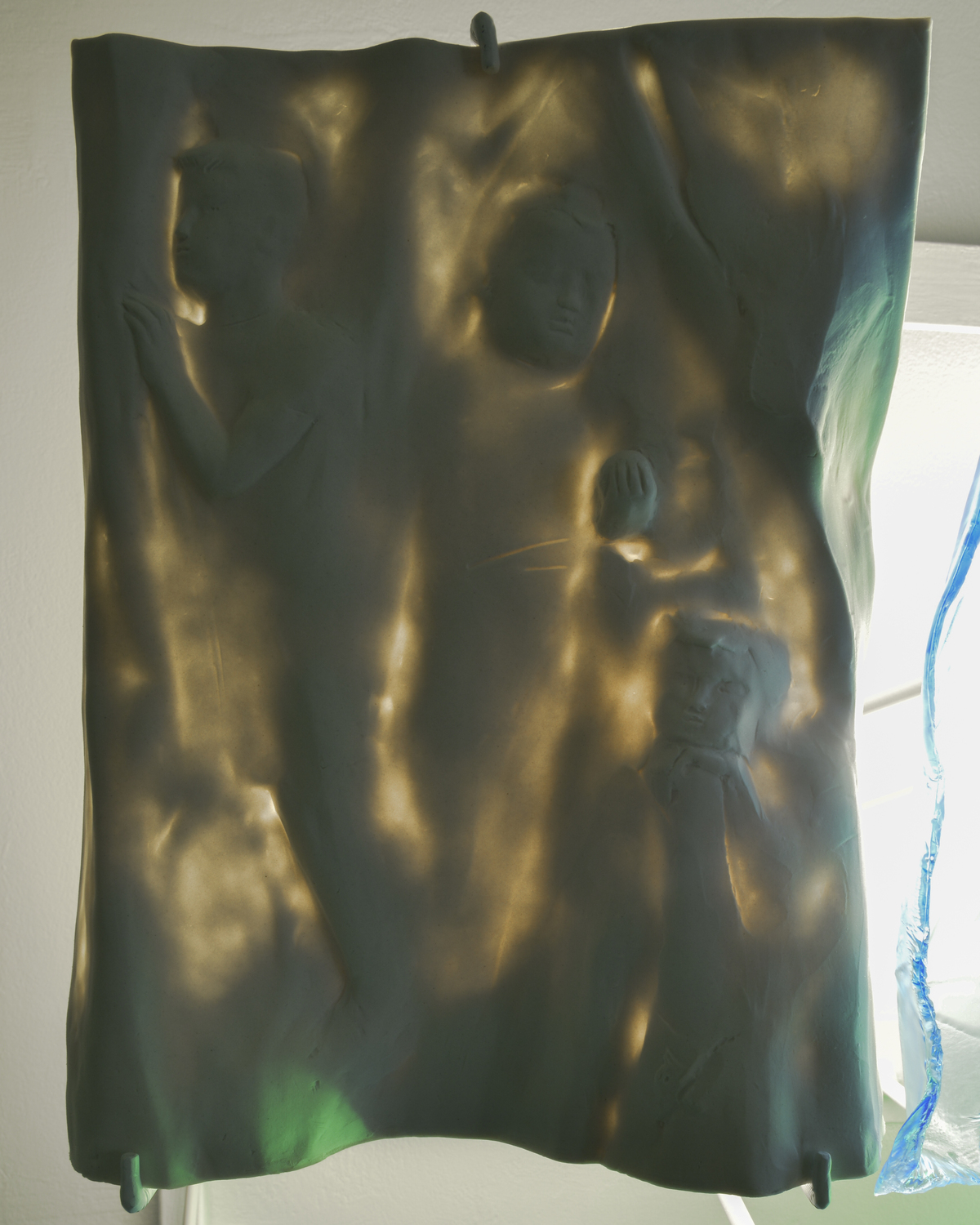
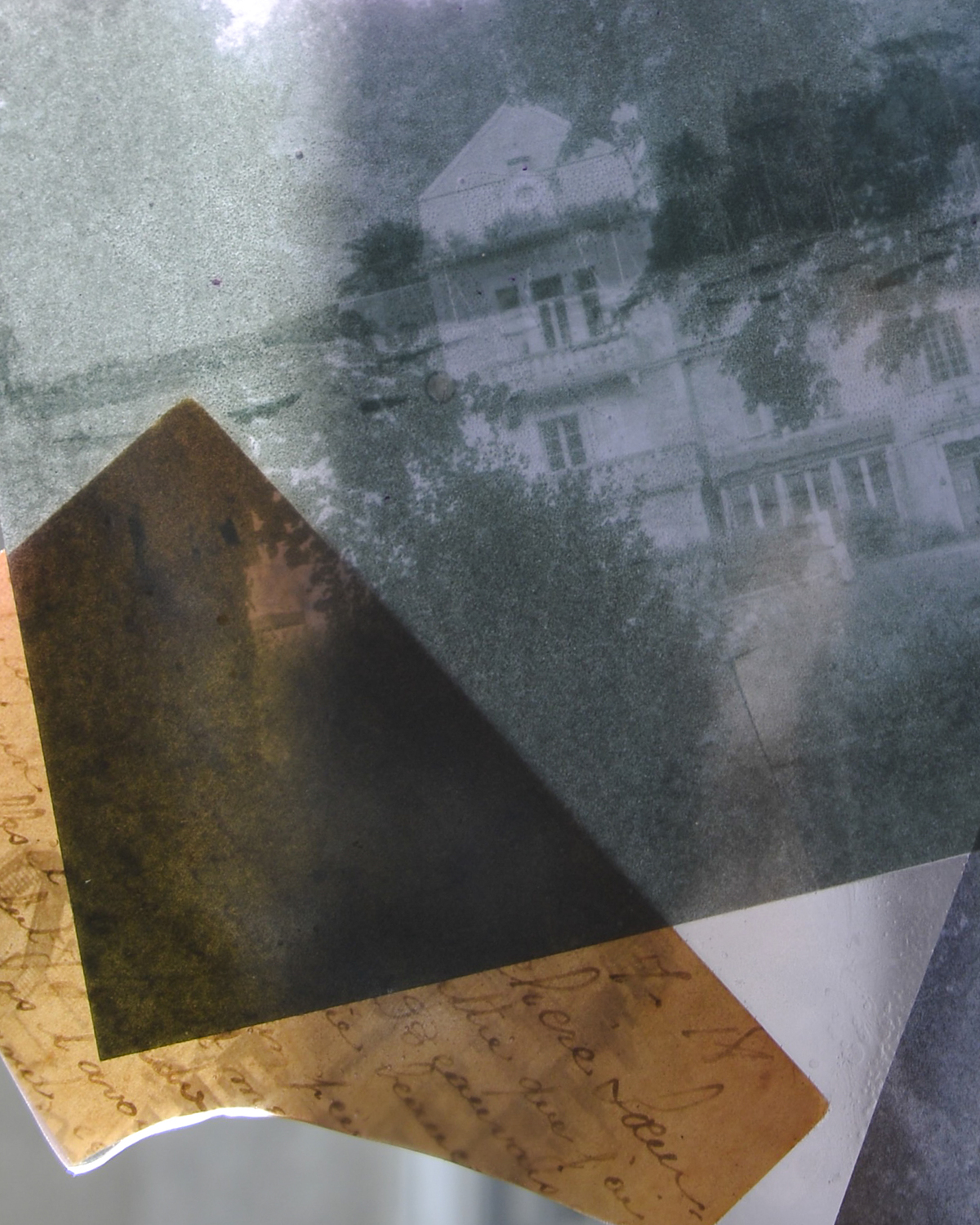
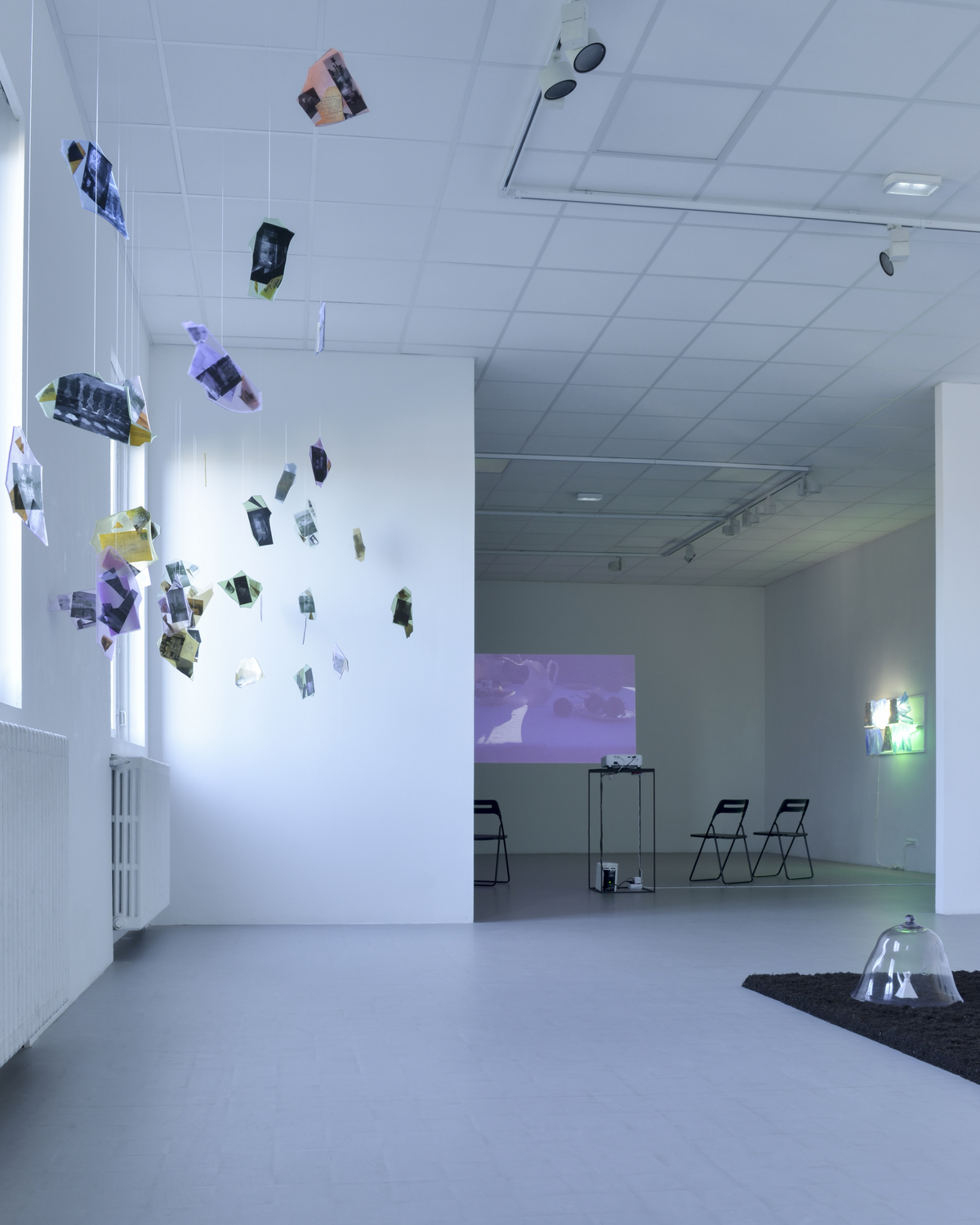
The human impulse to preserve the ephemeral has its roots in childhood. The installation reimagines the ritual of making “secrets” (sekretiki)—a widespread practice familiar to many children in Eastern Europe—as a way of working with memory.
Traditionally, a child would bury small treasures—flower petals, beads, candy wrappers—cover them with a shard of glass, and sprinkle them with earth, creating hidden micro-archives in courtyards and gardens. Here, the buried “secrets” are brought into the exhibition space and suspended in the air. Their shards of glass, recreated in plastic, become translucent surfaces for layered collages composed of photographs, drawings, and watercolours made specifically for the project, alongside found postcards.
Freed from the ground and suspended in space, these fragile-looking fragments transform the private, hidden gesture of childhood into an open field of associations. Each one becomes a small archive in itself, bringing together traces of lived experience, imagined places, and found fragments of other lives. The installation revisits the “secrets” as an act of preservation—an attempt to fix a fleeting moment and give it significance.
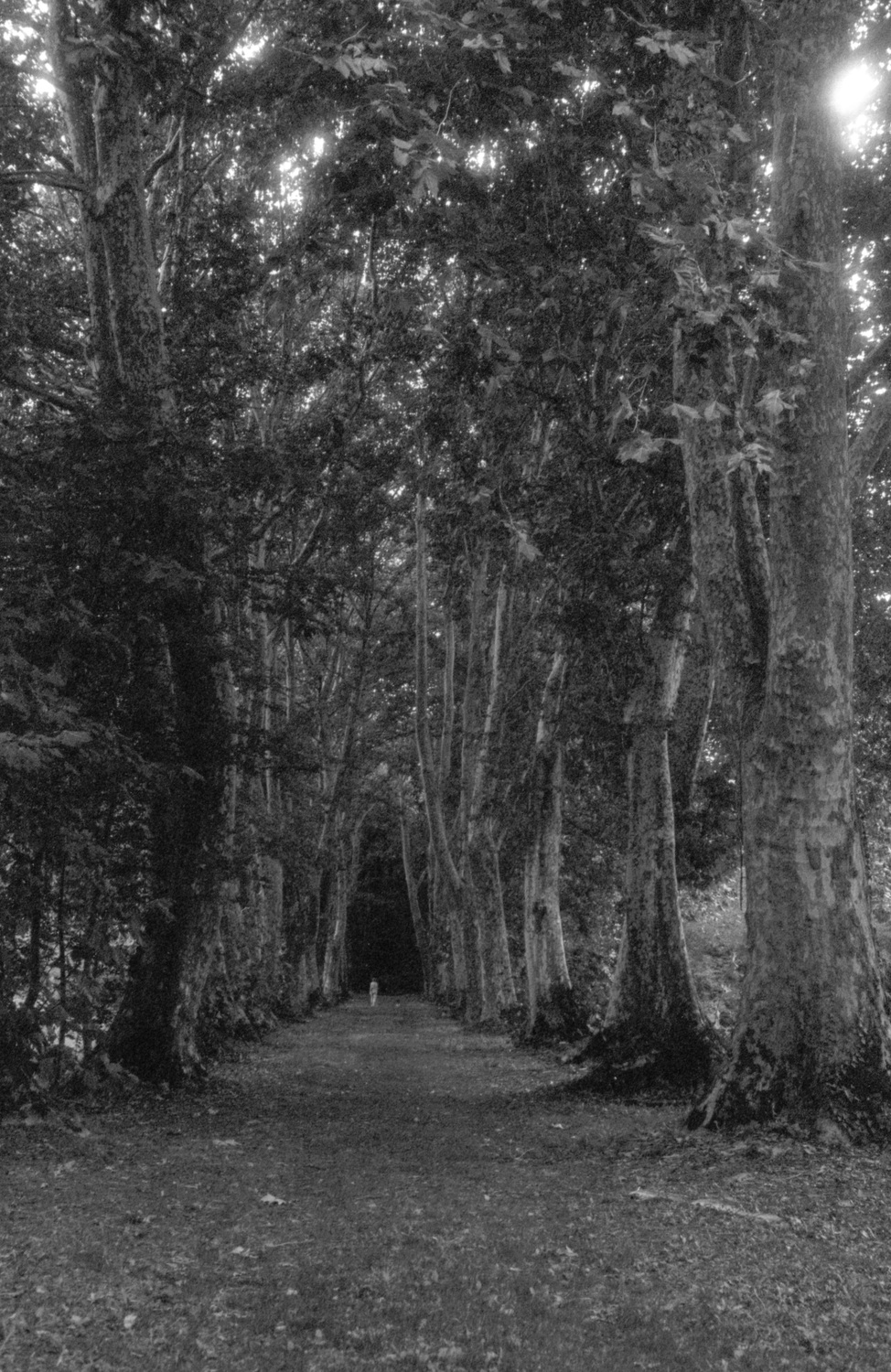
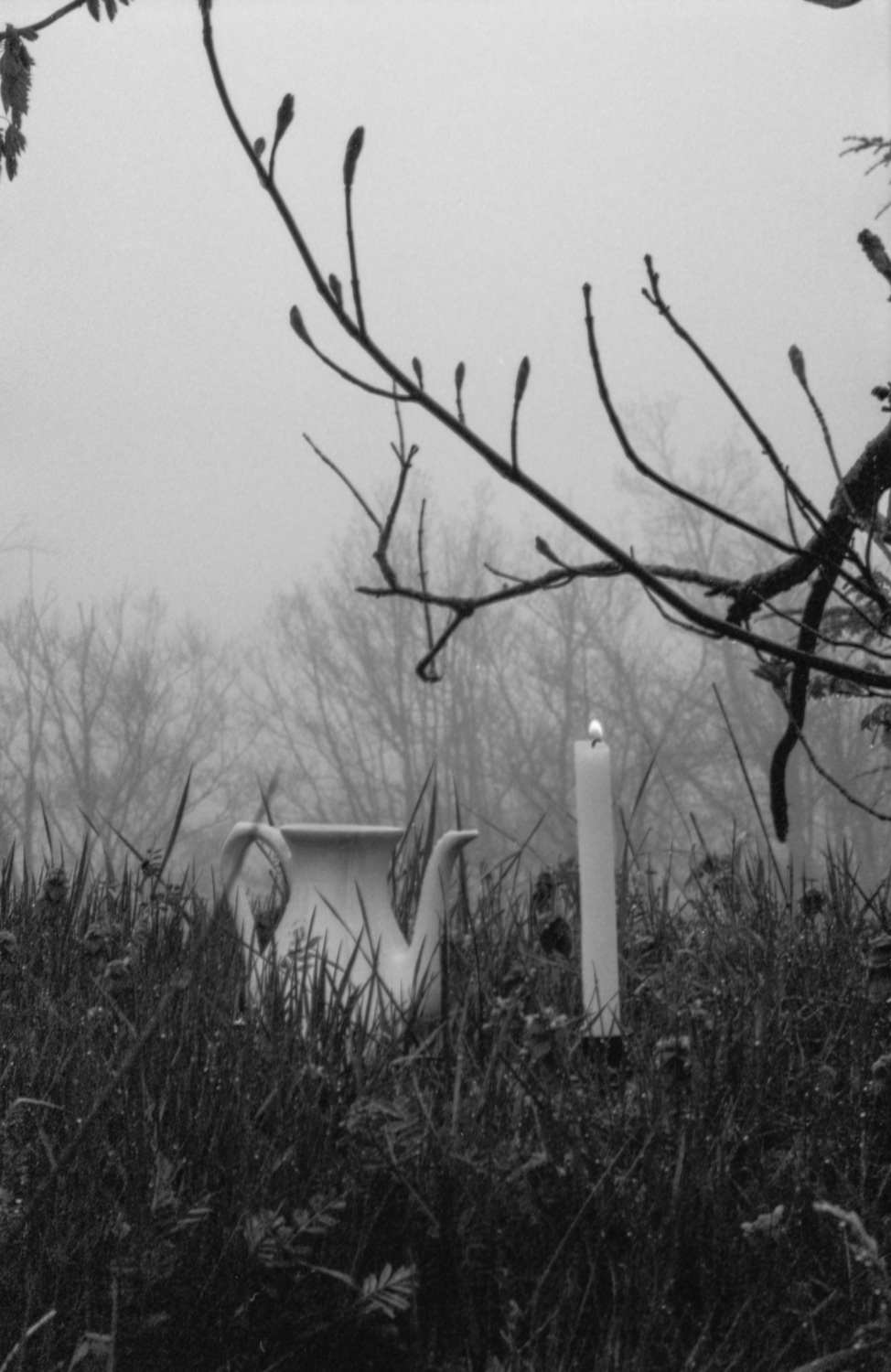
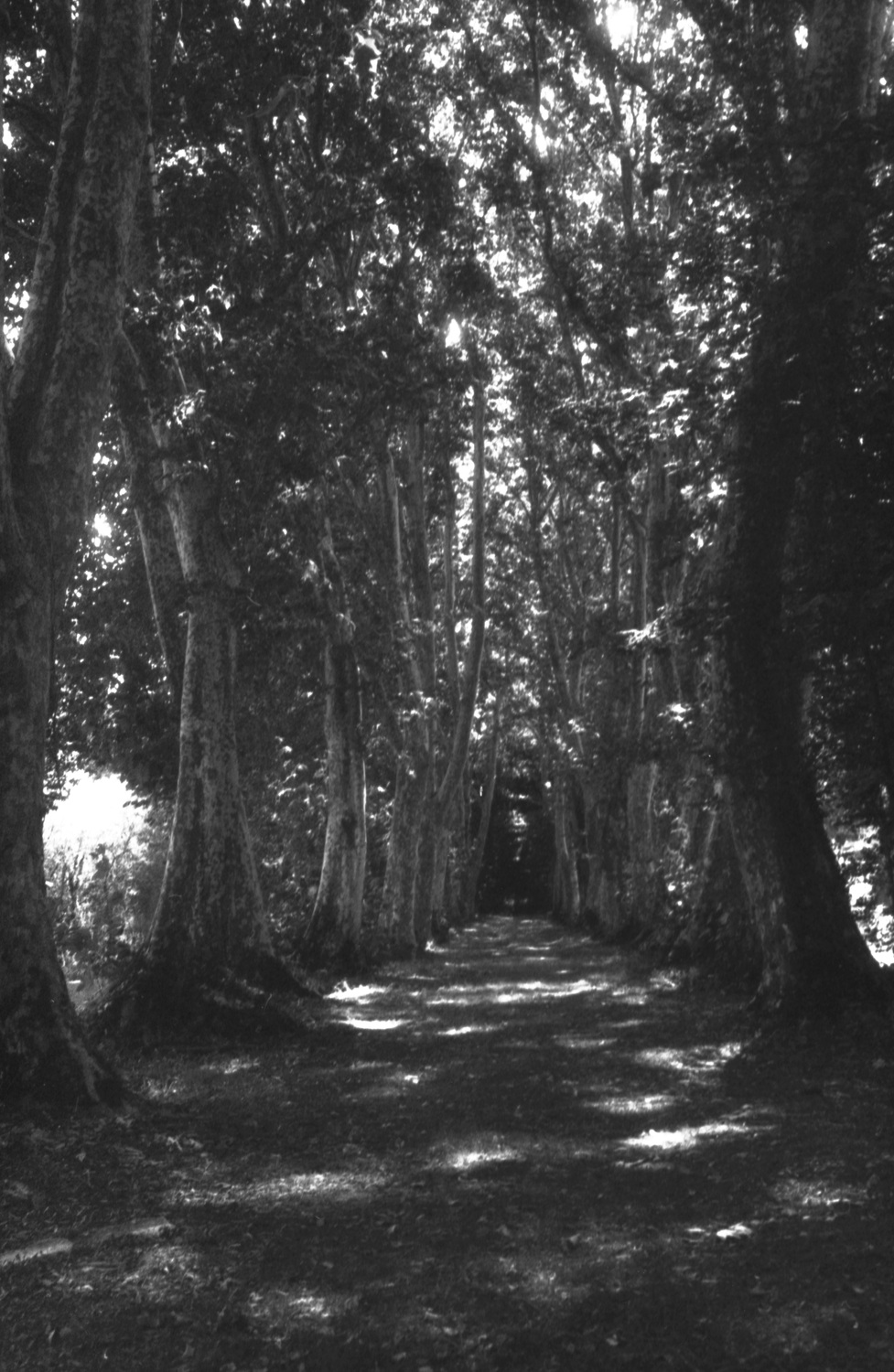
Film photography. Ph. 1, 3: Souillac, 2023. Ph. 2: Pilat Park, 2026
Une impression
Une impression.
Pas seulement le fait de ressentir quelque chose.
Non... Pas seulement.
Il y a ici l’idée d’une empreinte, de souvenirs qui imprègnent l’atmosphère, de ce qui s’imprime en nous.
De réminiscences qui semblent peu à peu se développer.
Cette impression m’a rappelé celle que l’on éprouve lorsque, d’un geste, on essuie la buée déposée sur un miroir. L’espace environnant se dévoile, avant d’être de nouveau éclipsé par la condensation. Entre apparition et disparition, quelque chose pourtant demeure : une empreinte laissée dans la mémoire. Les images apparaissent par fragments, se superposent, s’effacent parfois, mais laissent une trace.
C’est ainsi que m’est apparue l’exposition Matière de l’invisible d’Alesya Murlina, telle une traversée, une exploration de la mémoire, dans un temps suspendu où passé et présent s’entremêlent.
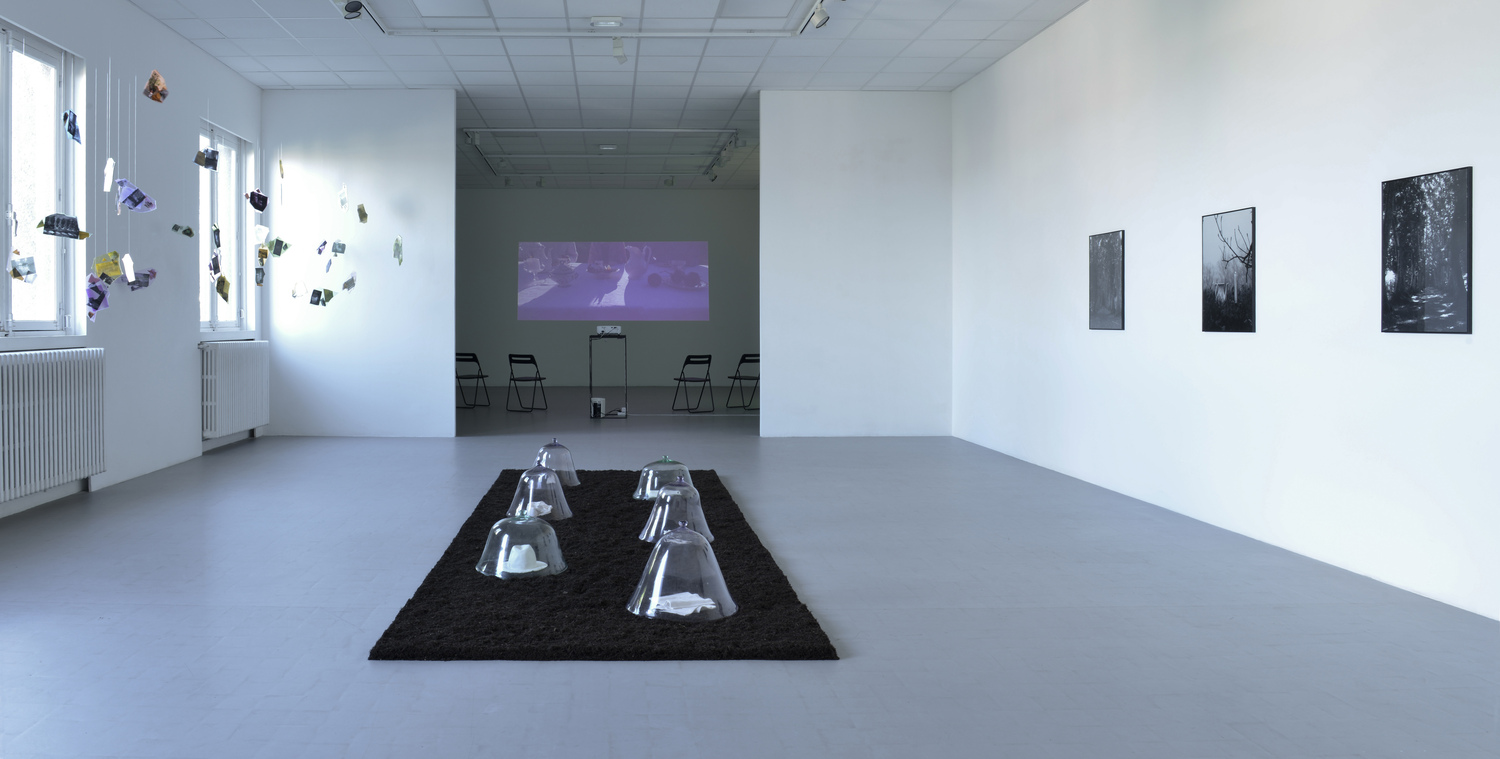
Strate après strate, l’exposition se dévoile. Les jeux de transparence participent à cette révélation progressive. Des répliques en céramique d’objets présentés sous cloche, des images elles aussi reproduites en porcelaine et révélées par la lumière, un ensemble de petits trésors suspendus au plafond : autant de présences qui se laissent deviner, se révèlent petit à petit.
À cette fragilité répond une volonté de préserver, de conserver de la part d’Alesya Murlina. Ce qui semble fragile est soigneusement contenu, protégé, mis à l’abri. Comme si les souvenirs encore balbutiants que révèlent ces images et ces objets faisaient naître le besoin de les retenir, d’en préserver la trace. Ce qui pourrait disparaître est ainsi maintenu, fixé, comme pour résister à l’effacement.
En déambulant dans l’exposition, une autre dimension se dessine : celle d’une circulation. Les souvenirs circulent, qu’il s’agisse de ceux de l’artiste ou de ceux d’autres personnes. Nos propres impressions se déplacent elles aussi, et nous naviguons à travers un récit qui se construit peu à peu, par fragments. Un récit en train de se tisser, dont on ne saisit d’abord que des bribes, à l’instar des conversations de la vidéo projetée au fond de l’exposition et qui nous accompagnent tout au long de la visite. Ces discussions nous parviennent comme une nouvelle strate du récit, sans jamais tout à fait le refermer.
La palette de la vidéo fait écho à celle des fragments suspendus, des couleurs douces et passées. Le triptyque photographique en noir et blanc prolonge cette impression. Tout semble porter les marques du temps.
L’exposition joue ainsi avec ce qui demeure lorsque les souvenirs eux-mêmes commencent à s’effacer. Matière de l’invisible apparaît alors comme un lieu où les sensations se déposent autant qu’elles se déploient, où la mémoire se construit par fragments. Et l’expérience se prolonge au-delà de notre départ.
Une impression.
Cependant, il ne s’agit plus seulement d’une sensation, mais de ce qui demeure après le passage des choses.
Leïla Simon,
Art Historian and Exhibition Curator.
Critical text written for the exhibition "Matière de l’invisible". 2026